



Launching a digital product can be exciting yet overwhelming, especially when you’re managing it alone. With careful planning and organization, you can successfully navigate this journey. Below are steps, examples, and a mini case study to guide you through this process.
Define Your Product Vision 🎯
Your product vision serves as your north star. It clarifies what you want to achieve. Spend time on defining who your target audience is, what problems your product solves, and how it’s different from competitors.
Example: Let’s say you want to launch a language-learning app. Your vision could be to make learning a new language accessible and engaging for everyone through interactive lessons and community support.
Create a Detailed Roadmap 📅
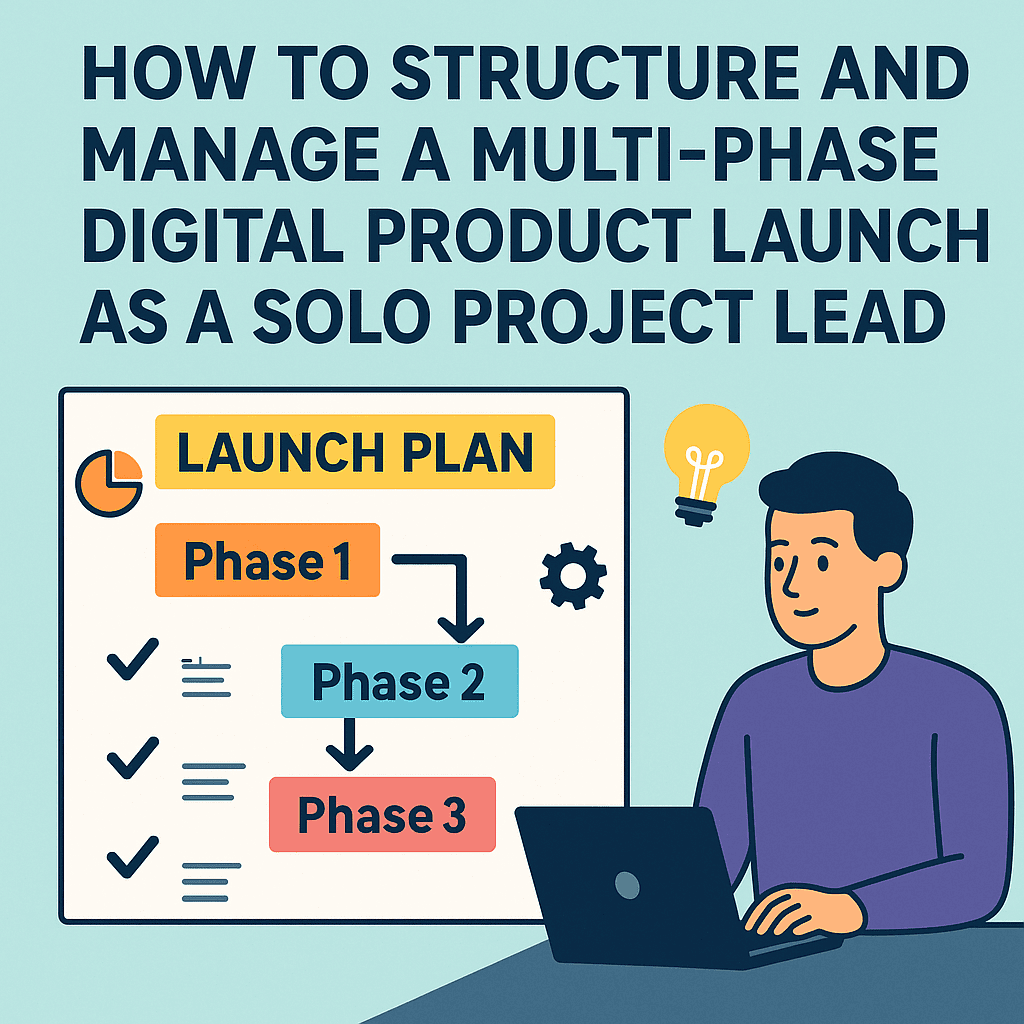
Developing a roadmap ensures that you stay on track. Split your launch into phases, focusing on:
- Discovery
- Development
- Testing
- Launch
- Post-Launch Evaluation
Here’s how you could outline these phases in a simple table:
| Phase | Activities | Duration |
|---|---|---|
| Discovery | Market research, define MVP | 2 weeks |
| Development | Build features, create design | 6 weeks |
| Testing | Beta testing, gather feedback | 4 weeks |
| Launch | Marketing, deployment | 2 weeks |
| Post-Launch Evaluation | Analyze metrics, determine next steps | 2 weeks |
Schedule Your Tasks 🗓️
Use project management tools like Trello or Asana to create tasks and deadlines. For instance, you can break down the “Development” phase into smaller tasks such as feature development, user interface design, and integration.
Communicate with Stakeholders 📣
Even as a solo project lead, you may need feedback or contributions from stakeholders. Make your communication clear. Regular updates can build support and keep everyone aligned with the project vision.
You could send out bi-weekly email updates that include:
- Progress on current tasks
- Any roadblocks or challenges
- Next steps
Manage Risks ⚠️
Identify potential risks and develop strategies to mitigate them early on. Keeping a risk log can be helpful. For example:
| Risk | Impact | Mitigation Strategy |
|---|---|---|
| Lack of user interest | High | Conduct early market research |
| Development delays | Medium | Allocate buffer time in the schedule |
| Negative feedback during testing | High | Include diverse testing group |
Monitor Metrics 📊
Post-launch, define KPIs (Key Performance Indicators) to measure success. For your language-learning app, metrics like user sign-ups, daily active users, and feedback scores are vital.
- User Sign-ups: Track the number of new users weekly.
- Daily Active Users: Measure engagement by monitoring users who return daily.
- User Satisfaction: Conduct surveys post-interaction to gather feedback.
Case Study: Language-Learning App Launch 📘
Let’s look at a mini case study involving a solo project lead, Alex, who launched a language-learning app.
1. Discovery Phase: Alex conducted surveys to understand user needs and designed a feature set that included gamified lessons, community chat, and progress tracking.
2. Development Phase: Using Trello, Alex broke down tasks and focused on completing the core features. He collaborated with a freelance designer for UI elements.
3. Testing Phase: Alex invited a group of 50 beta testers. Feedback indicated that users loved the gamification but found some lessons too difficult.
4. Launch Phase: Alex ramped up social media marketing and ran a promotional discount for the first month. This resulted in more sign-ups.
5. Post-Launch Evaluation: Alex analyzed the data and saw a growth of 20% in daily active users. He implemented suggestions from the feedback and planned a new feature based on user requests.
Conclusion
Managing a multi-phase digital product launch as a solo project lead is challenging but doable. With the right tools, organization, and clear metrics, you can navigate this complex journey successfully. Don’t forget to adjust your plan based on metrics and feedback; flexibility is key!
FAQs
Q: What tools can I use for project management?
A: You can try tools like Trello for task management and Asana for scheduling your projects effectively.
Q: How do I prioritize tasks?
A: Focus on tasks that align closely with your product vision and have the most significant impact on your launch objectives.
Q: What if something doesn’t go according to plan?
A: Embrace flexibility! Adjust your roadmap and communication strategies as needed, based on real-time feedback and progress.
Q: How do I keep the momentum after launch?
A: Continue engaging with users, collect feedback, and update your product regularly. Consider reaching out for user testimonials and referrals.
Q: What metrics should I track after the launch?
A: Monitor key metrics like user sign-ups, engagement rates, and customer satisfaction scores to gauge the success of your product post-launch.
Remember to maintain an adaptive mindset and be ready to pivot your strategy based on your findings! 🌟