


Project planning and scheduling are crucial elements of successful project management, and getting them right can mean the difference between a project’s success and failure. As an experienced PMO manager, I’ve learned that a thoughtful approach can elevate the quality of your project execution significantly.
Understanding the Project Lifecycle
Every project follows a lifecycle: initiation, planning, execution, monitoring and controlling, and closure. At the heart of this lifecycle are planning and scheduling. They serve as the roadmap, guiding teams toward project goals while ensuring that resources are utilized effectively.
Example Scenario: Imagine you’re launching a new product. The project lifecycle starts with defining the product, estimating costs, and determining timelines. During planning, you break tasks down, develop schedules, and communicate with stakeholders. Your schedule serves as a constant reference, helping you stay on track.
Step 1: Define Goals and Objectives
The first step in project planning is to clearly define what you want to achieve. SMART goals—Specific, Measurable, Achievable, Relevant, and Time-bound—provide a solid framework.
Example: Instead of setting a vague goal like “Improve customer satisfaction,” a SMART goal would be “Increase customer satisfaction ratings by 15% within six months.”
| Criteria | Description |
|---|---|
| Specific | Define who, what, where, when, and why of the project |
| Measurable | Establish metrics to track progress and determine success |
| Achievable | Ensure that the goal is realistic given resources and time |
| Relevant | Align the goals with broader business objectives |
| Time-bound | Set a deadline for achieving the goal |
Step 2: Identify Tasks and Milestones
Break down your project into manageable tasks. This step involves creating a Work Breakdown Structure (WBS) that identifies all activities necessary to achieve project objectives.
Case Study: A software development team developed a WBS for creating a new app. They identified tasks such as:
- Requirements Gathering
- Design Interface
- Develop Functionality
- Testing
- Deployment
By identifying milestones between tasks, such as completing the design phase, the team had clear checkpoints to monitor progress.
Step 3: Estimate Resources and Time
Estimating resources and time is essential for creating a realistic project schedule. This estimation should include:
- Human Resources: Determine who will be involved, their roles, and the time they will contribute.
- Budget: Assess costs associated with the project.
- Tools and Technology: Choose adequate software tools or platforms that can enhance efficiency.
| Resource Type | Description | Estimated Time |
|---|---|---|
| Developer | 2 developers needed for 3 months | 480 hours |
| Tester | 1 tester for 1 month | 160 hours |
| Software | Project management tool | Subscription cost |
Step 4: Develop the Project Schedule
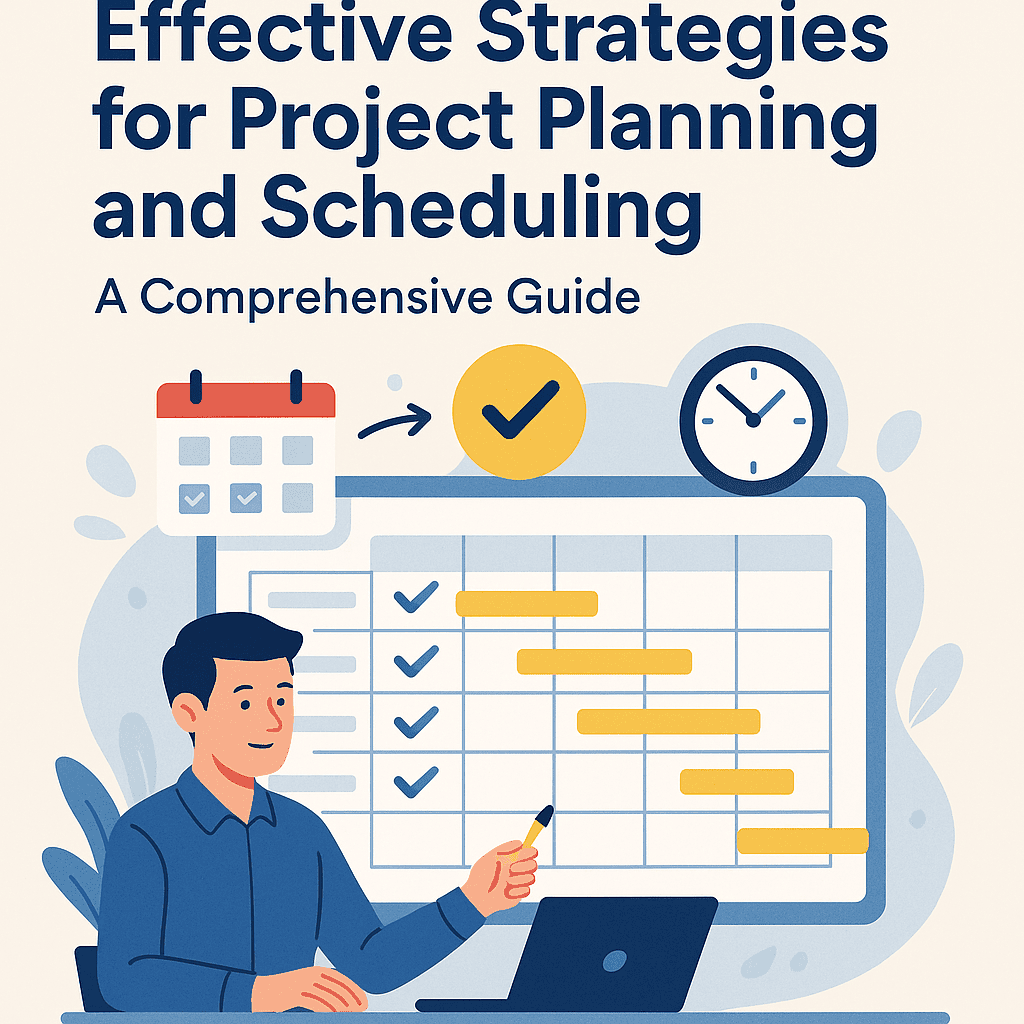
A project schedule can be created using various methodologies. Whether you prefer Gantt charts or Kanban boards, ensure that it visualizes tasks, deadlines, and dependencies clearly.
Tool Example: Tools like Trello or Asana can simplify task management and scheduling, providing transparency for the entire team.
| Start Date | Task | Duration | End Date |
|---|---|---|---|
| 01/01 | Requirements Gathering | 2 weeks | 01/14 |
| 01/15 | Design Interface | 3 weeks | 02/04 |
| 02/05 | Develop Functionality | 6 weeks | 03/18 |
| 03/19 | Testing | 2 weeks | 04/01 |
| 04/02 | Deployment | 1 week | 04/08 |
Step 5: Monitoring and Adjusting
Monitoring is about keeping track of the project through KPIs (Key Performance Indicators) that measure progress against the schedule. Regular check-ins with the team will help catch potential delays early.
Example: Suppose the development phase is running behind. This could lead to rescheduling testing. Instead of waiting for the deadline, proactive communication will allow you to make adjustments while maintaining quality.
Step 6: Engage Stakeholders
Engaging stakeholders throughout the project is vital. Regular updates and feedback loops ensure everyone is aligned and can raise concerns early.
Utilize techniques like:
- Stakeholder Meetings: Weekly or bi-weekly meetings can be effective.
- Progress Reports: Share success stories and challenges regularly.
Tip: Use visual aids in your presentations, such as charts or graphs, to articulate progress clearly.
Step 7: Risk Management
Analyzing potential risks early in project planning will save you from many headaches later. Create a risk register to document risks, their impact, and mitigation strategies.
| Risk | Impact | Mitigation Strategy |
|---|---|---|
| Resource Shortage | Delay in timelines | Cross-train team members |
| Budget Overrun | Project scope reduction | Regular budget reviews |
Conclusion
Effective project planning and scheduling are not just about putting together timelines and resources; they involve a strategic approach to achieving defined objectives while anticipating and managing risks. By following these strategies, you’ll place your team in a position to succeed and create projects that make a lasting impact.
FAQs
1. What are some effective project planning tools?
Tools such as Microsoft Project, Smartsheet, and Wrike are excellent options for planning and scheduling.
2. How do I manage changes in project scope?
Frequent stakeholder communication and having a change management process in place can help you manage scope changes effectively.
3. What should be included in a project schedule?
A project schedule should include tasks, durations, start/end dates, responsible parties, and dependencies.
4. How can I ensure team members are on track?
Using task management tools and conducting regular check-ins can assist in keeping everyone aligned with project goals.
5. What is the significance of a Gantt chart?
A Gantt chart is a visual representation of the project schedule, allowing teams to see task timelines, dependencies, and progress at a glance.
By implementing these strategies, you can transform your approach to project planning and scheduling, paving the way for successful outcomes. Happy planning! 🚀