Weighted Progress Calculator
Calculate overall physical progress from weighted work items using continuous, 0/100 or 50/50 rules of credit. The calculator always normalizes entered weights by their sum and shows how each item contributes percentage points to the total.
By Dr. Hassan Khames EliwaLast updated
Result
Weights are always normalized by their sum. 0/100 earns nothing until complete; 50/50 earns half on any start and half on completion.
- Entered weight sum
- 100.000
Normalized rules of credit
| Row | Normalized weight (%) | Physical (%) | Credited (%) | Contribution (points) |
|---|---|---|---|---|
| 1 | 30.000 | 100.000 | 100.000 | 30.000 |
| 2 | 70.000 | 50.000 | 50.000 | 35.000 |
How it works
Choose weights before judging performance
Weights should express an agreed basis such as budgeted labor hours, installed quantities within a comparable family or budget value. Do not casually mix those bases in one list. A large monetary item may have little installation effort, while a small specialist package may control access or testing. The weighting scheme determines what the overall percentage means, so approve and record it before the reporting period rather than adjusting weights to make current progress look favorable.
Understand automatic normalization
For each row, normalized weight is its entered weight divided by the sum of all weights. Overall progress is the sum of normalized weight times credited completion percentage. Weights may sum to 100, one or another positive total; the same relative proportions give the same answer. The displayed weight sum exposes that normalization. Zero-weight rows are permitted but earn no overall progress, and an all-zero list is rejected because it has no defined denominator.
Match the rule to observable evidence
Continuous credit uses the entered physical completion percentage directly. The 0/100 rule earns nothing until completion reaches exactly 100 percent. The 50/50 rule earns zero before starting, 50 percent for any positive completion below 100, and full credit at 100. One selected rule applies to the complete submitted list. If work packages need different rules, calculate them in separate agreed groups and combine the resulting group credits with a controlled higher-level weighting.
Keep physical inputs distinct from earned credit
A row that is physically 90 percent complete may earn zero under 0/100, half under 50/50 or 90 percent under continuous measurement. None of those choices changes the observed physical quantity; they change the accounting convention for progress. The output table therefore shows physical percentage, credited percentage and contribution separately. Select evidence appropriate to the rule: signed inspection records, installed quantities or completed handover deliverables are stronger than an unsupported subjective estimate.
Protect the denominator and the reporting date
Overall progress can fall when approved scope is added, even if crews installed more work. Reconcile scope changes through a controlled baseline revision and disclose the effect rather than hiding it in a new weight set. All rows should share a reporting cut-off, and completed status should reflect the same acceptance standard. This tool aggregates the submitted observations; it does not discover missing milestones, audit quality records or prove that the current percentage implies the same fraction of elapsed schedule.
Worked example
Two tested credit conventions
With continuous credit, rows 30,100 and 70,50 have weight sum 100. Contributions are 30.000 and 35.000 percentage points, giving 65.000% overall progress. Scaling the weights to 3 and 7 leaves the result unchanged.
Using the same physical observations under 0/100, the incomplete second row earns nothing and the overall result is 30.000%. Under 50/50 it earns half credit and the overall result returns to 65.000%. A separate row at 1% physically complete earns 50% credit under the start/finish convention, not 1%.
Expert tips
Common mistakes
- Changing weights to conceal a weak reporting period.
- Giving subjective partial credit under a strict 0/100 rule.
- Calling weighted scope completion a critical-path forecast.
Frequently asked questions
Must weights add to 100?
No. Positive relative weights are normalized automatically. The entered sum is displayed so a reviewer can see that a total other than 100 was not silently treated as percentage points.
Can a zero-weight milestone be included?
Yes, but it contributes nothing to the result. Keep it only if the table is still useful and it will not disguise an omitted weighting decision.
What counts as started under 50/50?
Any entered physical percentage greater than zero and below 100 receives half credit. The project team must separately define what evidence authorizes a positive start entry.
Can different rows use different rules?
Not in one calculation. Run distinct rule groups separately, preserve their group weights and aggregate the resulting credits using a documented higher-level calculation.
Is this the same as schedule progress?
No. A weighted completion percentage says how much credited scope has been earned under a convention. It does not identify critical-path delay or forecast the completion date.
How should rework be reported?
Apply the agreed acceptance policy consistently. If previously credited work no longer meets acceptance, revise the physical input and explain the adjustment rather than leaving unsupported earned credit in place.
Related calculators
Related guides
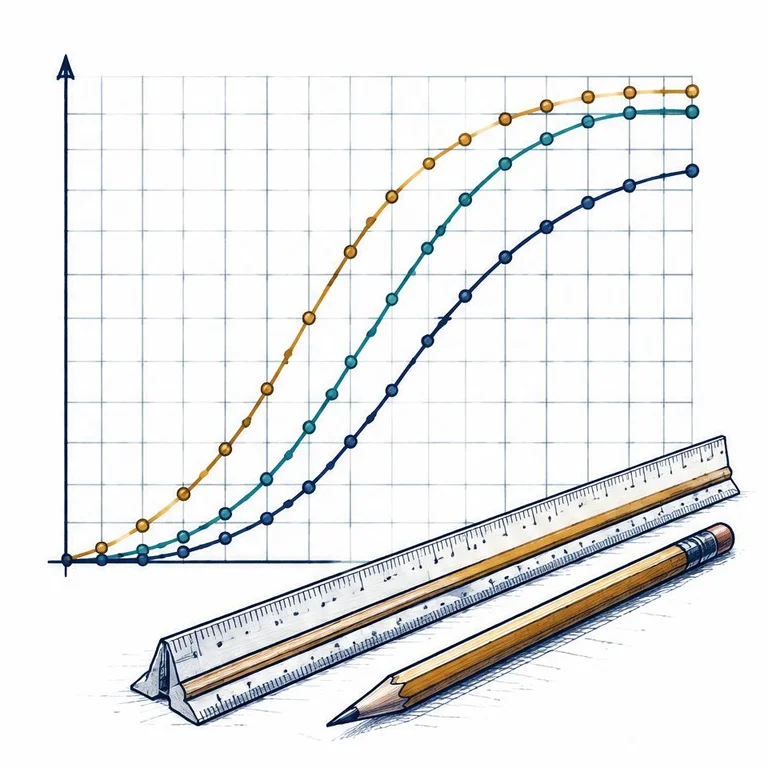 Construction & ProjectReading an S-curve: planned, earned and actual on one chartA practical way to separate planned accomplishment, earned value and actual cost before interpreting the gaps.15 November 2026 · 8 min read
 Construction & ProjectMeasuring physical progress: weighted milestones versus percent completeUse evidence-based milestones and stable weights to report completed work without confusing expenditure with physical progress.15 November 2026 · 8 min read
Sources and standards
About the author
Dr. Hassan Khames Eliwa holds a PhD in Construction & Built Environment and has more than 20 years of international project controls experience. He is Director of Eliwa Project Controls Limited in Auckland and founder of PMMilestone.org and PMMilestone.com.
Buy me a coffee