Earned Value Calculator
This earned value calculator compares budgeted work, completed work and actual spending to calculate cost and schedule variances, efficiency indexes and a forecast final cost. Choose one of three EAC assumptions and see an explicitly illustrative cumulative curve, not a reconstruction of project history.
By Dr. Hassan Khames EliwaLast updated
Result
- Cost variance (CV)
- -$50,000.00
- Schedule variance (SV)Budget-value variance, not days.
- -$100,000.00
- Cost performance index (CPI)
- 0.889
- Schedule performance index (SPI)
- 0.800
- Estimate to complete (ETC)
- $675,000.00
- Variance at completion (VAC)
- -$125,000.00
- TCPI (BAC)Required efficiency on remaining work to meet BAC.
- 1.091
How it works
Start with one consistent status date
BAC is the budget at completion for the authorized scope. PV is the budgeted value of work planned by the status date; EV is the budgeted value of work actually accomplished; AC is the cost incurred for that work. All four inputs must use the same currency, cost basis and scope baseline. Include incurred costs and sensible accruals rather than comparing earned work with invoices paid months later.
Following PMI earned value terminology, cost variance is CV = EV − AC and schedule variance is SV = EV − PV. Positive variances are favorable. CPI = EV ÷ AC measures cost efficiency, while SPI = EV ÷ PV compares earned work with the plan. An SPI of 0.8 means earned budget value is 80% of planned value; it does not prove that completion will be 20% late.
Select the forecast assumption
The default EAC = BAC ÷ CPI assumes current cost efficiency continues. Use AC + (BAC − EV) when the remaining work is expected to perform at its original budget rate. Use AC + (BAC − EV) ÷ (CPI × SPI) when both cost and schedule performance are expected to affect remaining cost. This last formula is a scenario, not an automatic penalty that every late project should receive.
ETC = EAC − AC is the forecast additional expenditure. VAC = BAC − EAC is the expected budget surplus or shortfall. TCPI(BAC) = (BAC − EV) ÷ (BAC − AC) measures the efficiency required on remaining work to meet the original budget. If actual cost has reached BAC, meeting that target would require a positive remaining budget that no longer exists.
Read colors and curves cautiously
For CPI and SPI, green means at least 1.00, caution means 0.90 to below 1.00, and high means below 0.90. Variance colors use the corresponding index; EAC and VAC use BAC/EAC. TCPI reverses the direction: up to 1.00 is good, above 1.00 through 1.10 is caution, and above 1.10 is high. These are display screening thresholds, not PMI-mandated control limits.
The chart’s smooth cumulative curves are illustrations fitted to the entered totals, not observed progress. A smoothstep planning curve locates an illustrative status position from PV/BAC, then synthetic EV and AC curves end at that position. A dashed cost curve continues to EAC. No calendar dates, actual reporting periods or critical-path information are supplied, so neither the inferred status position nor the forecast endpoint is a schedule prediction.
Worked example
A package trending over budget
Enter BAC $1,000,000, PV $500,000, EV $400,000 and AC $450,000, using the default CPI forecast. CV is −$50,000.00 and SV is −$100,000.00. CPI displays 0.889 and SPI 0.800; both are high concern under the screening bands above.
EAC is $1,125,000.00, ETC is $675,000.00, and VAC is −$125,000.00. TCPI(BAC) displays 1.091, a caution: the remaining budget would require better efficiency than achieved so far. Switching to budget-rate remaining work gives EAC $1,050,000.00; the combined CPI × SPI assumption gives $1,293,750.00. Discuss which assumption fits the remaining scope rather than averaging the three results.
From the field
From Dr. Hassan Khames Eliwa's project controls experience
I've lost count of the progress meetings where a package was declared 50% complete for one reason: half the budget had gone. I've kept the numbers round here so the arithmetic is easy to follow. Say BAC is $1,000,000, PV $500,000 and AC $500,000 at the cutoff. Treat the spend as earned value and EV becomes $500,000, CPI is 1.000 and the default CPI-based EAC is $1,000,000.00. Perfectly tidy. And it tells you nothing about what is actually built.
When we went out and measured installed quantities at budget rates, the package was 38% physically complete: $380,000 earned. Leave BAC, PV and AC alone and enter that EV. CPI drops to 0.760 and EAC climbs to $1,315,789.47, assuming the same efficiency carries on. Materials sitting in a laydown yard and paid invoices didn't count until our earning rules said they did.
What I do now: no forecast discussion until physical progress has been reconciled. A cost report can balance to the cent while the package is buying far less finished work than planned.
Field quick reference
| Earning basis | CPI | EAC |
|---|---|---|
| Spending treated as earned | 1.000 | $1,000,000.00 |
| Verified completed work | 0.760 | $1,315,789.47 |
Expert tips
Common mistakes
- Entering spending as EV confuses cost with accomplishment. EV uses budget rates for completed work, regardless of what that work actually cost.
- Reading SV as days late ignores its units. SV is a budget-value difference; check the critical-path schedule for milestone delay and available float.
- Smooth curves are not a reporting history. Use actual time-phased records in a management presentation so the shape of progress comes from evidence rather than an illustration.
Frequently asked questions
Why are zero inputs rejected?
CPI and SPI require positive denominators, and meaningful ratio forecasts also require positive earned value. At mobilization, report the available raw totals and defer ratio forecasts until there is measurable progress.
Can actual cost exceed BAC?
Yes. AC may exceed the budget, and the calculator still produces an EAC. TCPI against BAC is then marked not achievable because no positive original budget remains.
Why cannot EV exceed BAC?
This model treats BAC as the total approved scope budget. Earned value beyond BAC suggests inconsistent scope, a baseline change or an input error that should be reconciled first.
Is an SPI of one proof the schedule is healthy?
No. Traditional SPI tends toward one as all budgeted work is earned, even if completion is late. Review milestone dates, float and critical-path movement alongside it.
Is the dollar symbol mandatory?
It is a display convention. You can enter another currency consistently, but the tool does not convert currencies, adjust inflation or distinguish nominal from constant-price budgets.
Related calculators
Related guides
 Construction & ProjectCPI and SPI trends: read the direction, not just the numberRead period and cumulative CPI and SPI together, test the data behind changing trends, and turn earned-value signals into practical decisions.16 November 2026 · 8 min read
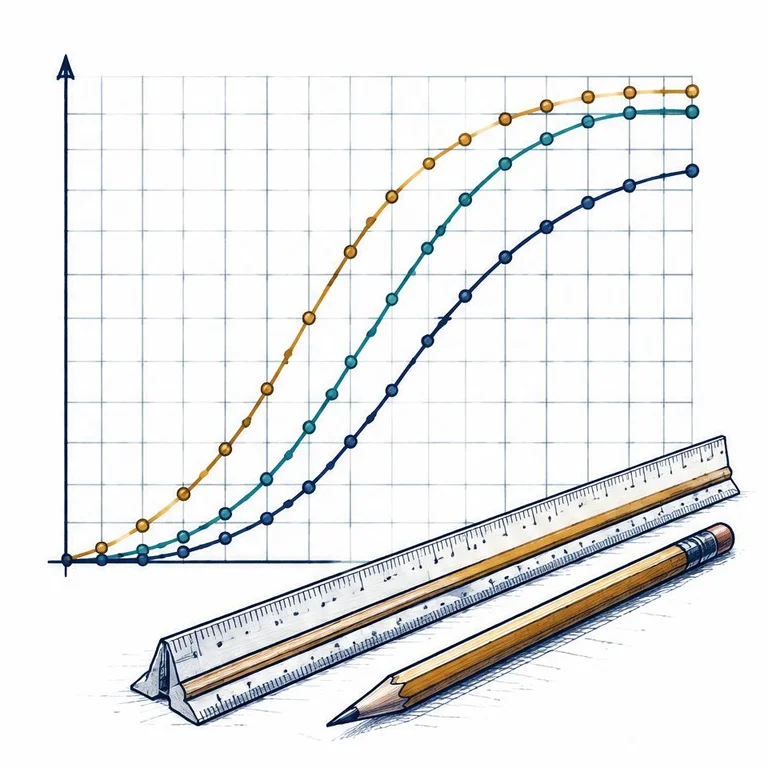 Construction & ProjectReading an S-curve: planned, earned and actual on one chartA practical way to separate planned accomplishment, earned value and actual cost before interpreting the gaps.15 November 2026 · 8 min read
 Construction & ProjectMeasuring physical progress: weighted milestones versus percent completeUse evidence-based milestones and stable weights to report completed work without confusing expenditure with physical progress.15 November 2026 · 8 min read
 Construction & ProjectThree-point estimating: when PERT beats a single guessA practical guide to three-point duration estimates, weighted averages and the limits of turning uncertain activities into a promised date.14 November 2026 · 7 min read
 Construction & ProjectEarned value management in plain English: CPI, SPI and what to do about themTurn planned value, earned value and actual cost into useful decisions without confusing budget performance with cash flow or time.14 November 2026 · 7 min read
Sources and standards
About the author
Dr. Hassan Khames Eliwa holds a PhD in Construction & Built Environment and has more than 20 years of international project controls experience. He is Director of Eliwa Project Controls Limited in Auckland and founder of PMMilestone.org and PMMilestone.com.
Buy me a coffee