Activity Duration & Productivity Calculator
This activity duration calculator divides work quantity by per-crew production rate multiplied by the number of independent crews. It supports hourly and daily rate bases, then reports working days, elapsed working hours, crew-hours and combined daily production.
By Dr. Hassan Khames EliwaLast updated
Result
- Working hours elapsed
- 20.00 hours
- Crew-hours
- 40.00 crew-hours
- Daily production
- 400.00 units/day
How it works
Define exactly what the rate measures
Quantity and rate must use the same work unit: metres with metres per crew, tonnes with tonnes per crew, or another consistent measure. The entered rate belongs to one complete crew, not one worker and not the whole site. If a historical record already reports output for three crews together, divide it to obtain a defensible per-crew rate before entering three crews here.
Select the correct time basis
With an hourly rate, daily production equals rate × crew count × working hours per day. With a daily rate, daily production equals rate × crew count; working hours do not multiply the rate again. Working duration is quantity divided by combined daily production. Elapsed working hours are duration multiplied by daily working hours. Crew-hours then multiply elapsed working hours by crew count. Crew-hours are not worker-hours unless every crew contains exactly one worker.
Recognise the linear scaling assumption
Adding crews is assumed to add proportional production immediately. The model does not represent restricted work fronts, congestion, shared plant, learning, mobilisation, inspection holds or fatigue. Its working days are productive time equivalents, not calendar dates. A result of 2.5 days could mean two full shifts plus half a shift, but weekends, holidays and access windows must be placed in a separate schedule. Fractional days are retained rather than rounded up so the underlying productivity remains visible.
Worked example
Scenario 1: an hourly crew rate
For 1,000 units of work, each crew produces 25 units per hour. Two independent crews working eight hours per day produce 25 × 2 × 8 = 400.00 units/day. Working duration is 1,000 ÷ 400 = 2.50 days. Elapsed productive time is 20.00 hours, and total crew effort is 40.00 crew-hours. Those forty hours describe crews; staffing is needed to convert them into worker-hours.
Scenario 2: a daily crew rate
For 1,200 units at 150 units per crew-day, two crews produce 300.00 units/day. Duration is 4.00 working days. At eight working hours per day, that represents 32.00 elapsed working hours and 64.00 crew-hours. The daily production is not multiplied by eight again: the selected rate already describes a complete working day.
From the field
From Dr. Hassan Khames Eliwa's project controls experience
Pipe laying is where I learned to distrust a planned production rate once the ground changes. The figures here are tidied up for clarity, but the pattern is real. We had 600 m of pipe left, programmed for one crew at 24 m per working day on eight-hour shifts. Enter quantity 600, rate 24, daily basis, one crew and eight hours. You get 25.00 working days, 200.00 elapsed working hours and 200.00 crew-hours. That's 25 crew-days (crew-hours divided by the eight-hour shift; the calculator doesn't label crew-days separately).
Then excavation hit a restricted section, and the daily records supported only 15 m per crew-day. Re-run the full remaining quantity at that rate: 40.00 working days, 320.00 elapsed working hours and 320.00 crew-hours, or 40 crew-days. Fifteen more working days, fifteen more crew-days. These are two forecasts for the same 600 m. Don't add them. If some pipe is already in, enter only the balance.
The obvious answer was a second crew. At 15 m per day each, combined output is 30.00 m/day and the duration drops to 20.00 working days. Effort is still 40 crew-days, or 320.00 crew-hours. Shorter, yes. Cheaper, no.
These days I update the rate from measured output first, then check whether the access plan really lets two crews excavate, bed, lay and test without fighting over the same work front.
Field quick reference
| Rate and crew plan | Working days | Crew-hours |
|---|---|---|
| Planned rate, one crew | 25.00 | 200.00 |
| Restricted rate, one crew | 40.00 | 320.00 |
| Restricted rate, second crew | 20.00 | 320.00 |
Expert tips
Common mistakes
- Labour-hours per unit belong outside a production-rate field. That is an effort requirement, the reciprocal of output per hour, and requires a different calculation.
- Working days and calendar days serve different purposes. Shift patterns, weather allowances and nonworking dates must be considered before promising a completion date.
- Crew-hours measure crew attendance, not individual worker-hours. Multiply each crew’s hours by its actual staffing only when estimating person-hours or payroll cost.
Frequently asked questions
Can I enter a rate per worker?
Only if one worker is deliberately treated as one crew throughout the estimate. Otherwise convert to the combined output of the defined crew before entering the rate.
What happens when I choose a daily rate?
The rate is already a complete crew-day output. Working hours per day only translate the resulting days into elapsed working hours and crew-hours; they do not increase production again.
Does doubling crews always halve duration?
It does in this arithmetic model. Real sites may be constrained by access, materials, plant or supervision, so the assumed independent output must be checked before using the result.
Why are fractional days not rounded upward?
They show the calculated productive duration without imposing a scheduling convention. Round to full shifts externally if your contract, mobilisation plan or resource booking requires whole-day attendance.
How can I compare this with PERT?
Use a quantity-rate estimate as one planning input, then examine uncertainty with the PERT calculator. A deterministic production result is not a probability forecast or a confidence level.
Related calculators
Related guides
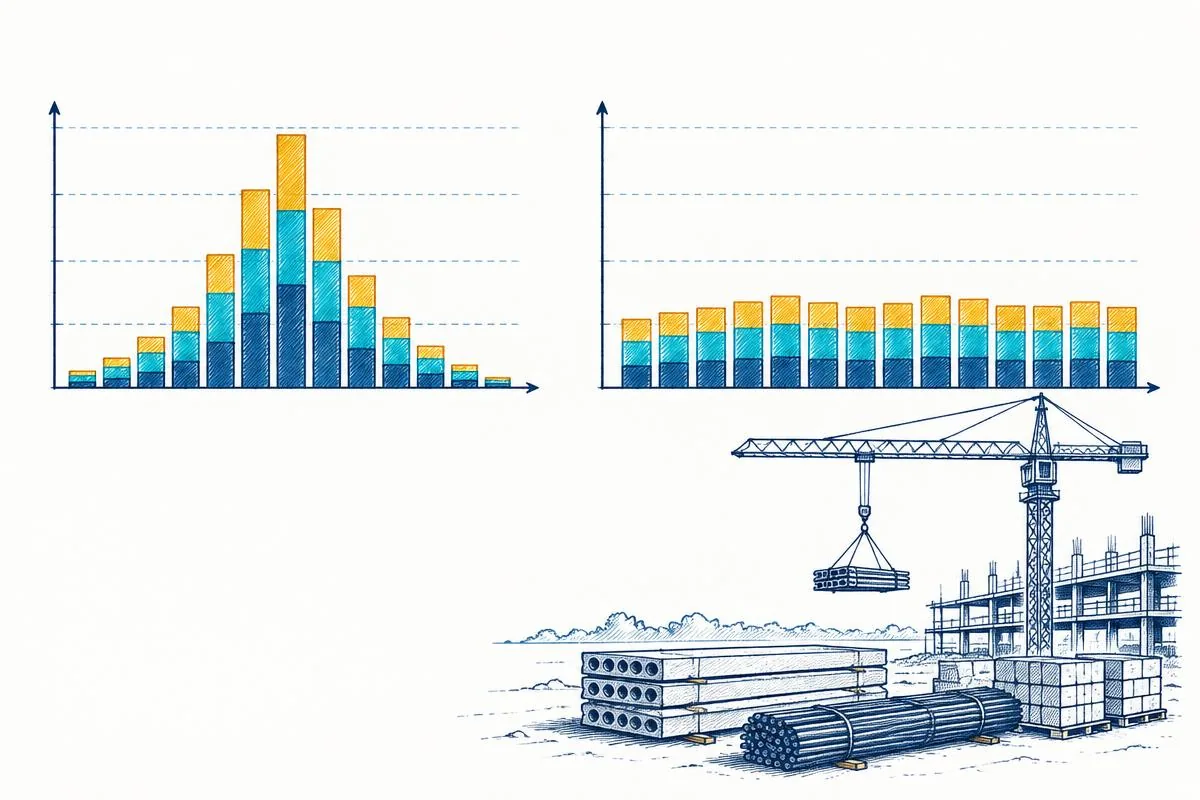 Construction & ProjectResource histograms and levelling: spot the peak earlyBuild a resource histogram, distinguish levelling from smoothing, and test whether a flatter labour plan is genuinely deliverable.16 November 2026 · 8 min read
 Construction & ProjectCrew size, man-hours and productivity: labour arithmeticConvert scope and production rates into labour-hours and crew sizes, then test utilization, whole-shift bookings and labour cost.16 November 2026 · 8 min read
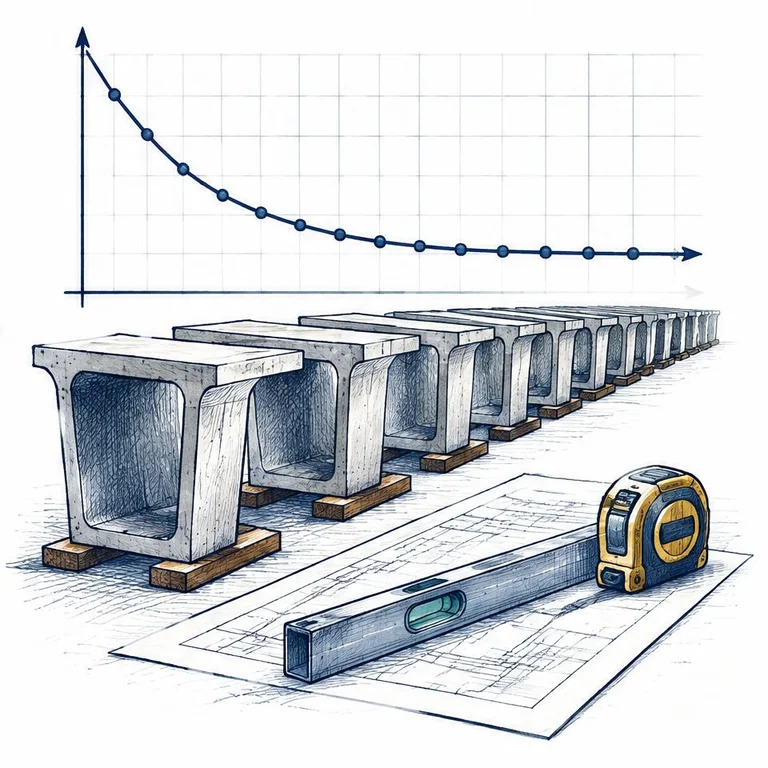 Construction & ProjectLearning curves in construction: averages vs unitsApply Wright cumulative-average learning curves, verify incremental unit effort, and translate repeatable work into duration and labour cost.15 November 2026 · 8 min read
 Construction & ProjectSchedule crashing vs fast-tracking: buying back timeCompare resource-supported duration reductions with overlapping work, using tested cost slopes and changing critical paths.14 November 2026 · 8 min read
 Construction & ProjectActivity duration from production ratesConvert quantities, crew outputs and working hours into defensible activity durations without double-counting productivity allowances.14 November 2026 · 8 min read
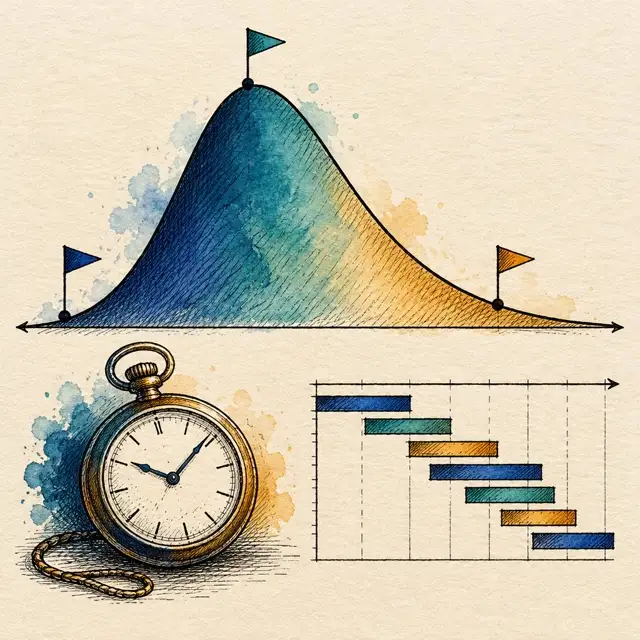 Construction & ProjectThree-point estimating: when PERT beats a single guessA practical guide to three-point duration estimates, weighted averages and the limits of turning uncertain activities into a promised date.14 November 2026 · 7 min read
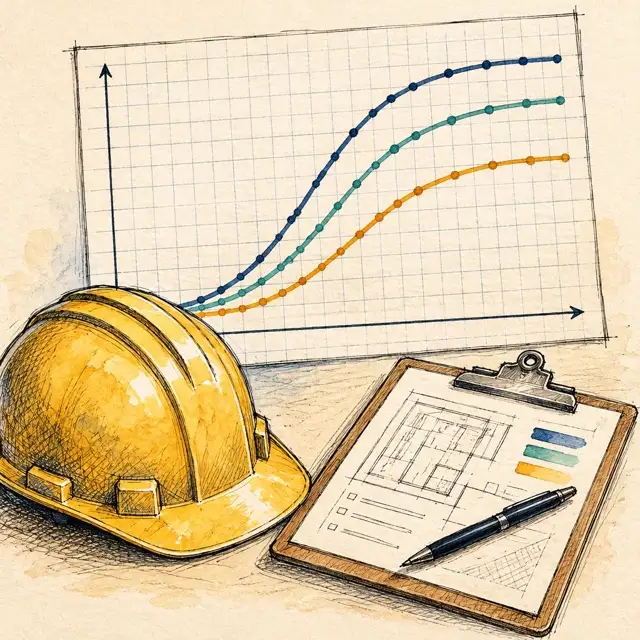 Construction & ProjectEarned value management in plain English: CPI, SPI and what to do about themTurn planned value, earned value and actual cost into useful decisions without confusing budget performance with cash flow or time.14 November 2026 · 7 min read
About the author
Dr. Hassan Khames Eliwa holds a PhD in Construction & Built Environment and has more than 20 years of international project controls experience. He is Director of Eliwa Project Controls Limited in Auckland and founder of PMMilestone.org and PMMilestone.com.
Buy me a coffee