Insulation Calculator
This insulation calculator subtracts explicit openings from gross area, estimates material volume and calculates the thermal resistance of a uniform insulation layer. It reports SI and US R-values from entered thickness and conductivity, without certifying a product or complete building assembly.
By Dr. Hassan Khames EliwaLast updated
Result
- Net area
- 50.00 m²
- Order area
- 55.00 m²
- Net material volume
- 5.0000 m³
- US R-value
- 14.1957 h·ft²·°F/Btu
How it works
Separate quantity from thermal performance
Gross area and opening deductions describe the surface being insulated. Net area equals gross area minus those deductions. Order area adds the entered material allowance to net area. The allowance affects purchasing only; it does not increase installed thickness, volume or thermal resistance. Net volume equals net area multiplied by the installed layer thickness.
In metric mode, area is entered in square metres and thickness in millimetres. In imperial mode, area is entered in square feet and thickness in inches. The calculation converts both to SI internally. Conductivity remains W/m·K in either mode, deliberately: mixing an imperial conductivity value into that field would give a plausible-looking but wrong answer. Read the declared units on the product data sheet.
Calculate resistance for a homogeneous layer
SI R-value equals thickness in metres divided by thermal conductivity in W/m·K. Its unit is m²·K/W. Greater thickness raises resistance when conductivity stays constant. Greater conductivity lowers resistance at the same thickness. Area does not enter that resistance equation; doubling the covered area doubles material quantity, not the R-value of the layer.
The US result uses h·ft²·°F/Btu, with the International Table Btu conversion. The conversion follows from square feet, seconds per hour, temperature interval and Btu energy rather than treating the two R-value scales as interchangeable. NIST provides the underlying conversion factors. Reported digits describe arithmetic precision, not a guarantee that the conductivity measurement is equally precise.
Assess the complete assembly separately
The Department of Energy explains that insulation performance depends on material, thickness and installation. The simple thickness-over-conductivity model represents a uniform layer under the stated conductivity assumption. It does not add surface films, framing paths, metal fixings, air cavities or adjacent boards. Nor does it predict moisture accumulation, condensation risk, air leakage or seasonal energy use.
A wall containing framing and cavities has parallel heat-flow paths. Quoting the cavity insulation result as the whole-wall rating can overstate performance. Compression, gaps, wetting and temperature conditions can also change installed behavior. Use documented product properties and an appropriate assembly method when checking a specification or regulatory requirement.
Make deductions auditable
Openings are a direct area deduction, not a guessed percentage. Keep the opening schedule with the measurement sheet. An opening deduction equal to gross area is accepted and produces zero net quantity; resistance still describes the entered material layer, whether or not any is ordered. Deductions greater than gross area are rejected. Positive thickness and conductivity are always required. Numerical bounds are safeguards against entry mistakes, not accepted construction ranges.
Worked example
Scenario: metric wall quantity
A gross wall area of 60 m² contains 10 m² of explicit openings. With 100 mm insulation and conductivity 0.04 W/m·K, net area is 50.00 m² and net material volume is 5.0000 m³. A 10% allowance gives 55.00 m² to order. SI resistance is 2.5000 m²·K/W and US resistance is 14.1957 h·ft²·°F/Btu.
Scenario: imperial panel estimate
A 200 ft² surface has 20 ft² of deductions and receives a 4 in layer with conductivity 0.04 W/m·K. With no allowance, net and order area are both 180.00 ft². Net volume is 1.6990 m³. The resistance is 2.5400 m²·K/W, or 14.4228 h·ft²·°F/Btu. The conductivity field still takes SI units.
Expert tips
Common mistakes
- Entering US R-value as conductivity mixes two different physical quantities. Check the property name and its unit on the product sheet before using either number.
- Subtracting openings from an already net survey understates the order. Use gross area with explicit deductions, or enter net area with no further deductions.
- Layer resistance is not a compliance certificate or an assembly rating. Framing paths and moisture behavior still need their own assessment.
Frequently asked questions
Does allowance improve R-value?
No. It increases order area only; the installed thickness and conductivity control layer resistance.
Why is conductivity always SI?
A fixed conductivity unit makes the thermal input unambiguous while dimensions can still be entered in either unit system.
Is US R-value the same number as SI R-value?
No. The physical resistance is the same, but the unit scales differ.
Are framing losses included?
No. The result is for a homogeneous layer, without parallel heat paths through framing or fixings.
Can net area be zero?
Yes. Equal gross area and deductions give zero quantity, while the material resistance calculation remains defined.
Can this certify insulation?
No. Certification and regulatory assessment require appropriate product documentation, installation details and applicable local requirements.
Related calculators
Related guides
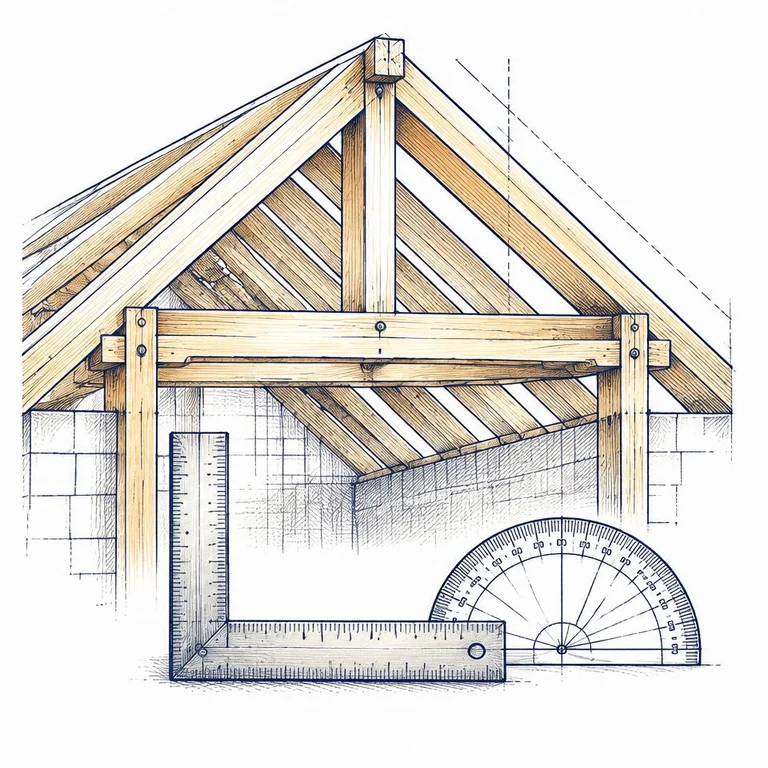 Construction & ProjectRoof pitch, rafters and slope: one triangle, three tradesOne labeled triangle connects roof pitch, percent grade, and rafter slope length, but a geometric answer is not a structural design or cutting list.15 November 2026 · 8 min read
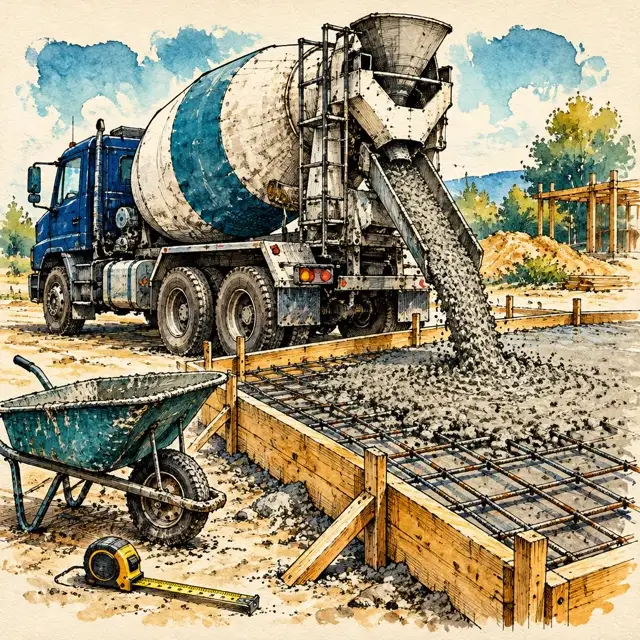 Construction & ProjectHow to order concrete without running short or overpayingA field-focused guide to concrete quantities, thickness checks, sensible allowances and the delivery details that prevent expensive surprises.14 November 2026 · 7 min read
Sources and standards
About the author
Dr. Hassan Khames Eliwa holds a PhD in Construction & Built Environment and has more than 20 years of international project controls experience. He is Director of Eliwa Project Controls Limited in Auckland and founder of PMMilestone.org and PMMilestone.com.
Buy me a coffee