Roof Pitch Calculator
This roof pitch calculator converts vertical rise and horizontal run into rise/run ratio, slope angle and rise per twelve units of run. It also reports the geometric slope-length multiplier; none of these results sizes rafters or approves a roofing material.
By Dr. Hassan Khames EliwaLast updated
Result
- Angle
- 36.8699°
- Pitch per 12
- 9.0000:12
- Slope multiplier
- 1.250000
- Run (other units)
- 13.1234 ft
How it works
Measure a right triangle, not a roof surface length
Rise is the vertical change between the ends of the measured roof section. Run is its horizontal projection. Both must use the same unit system: metres in metric mode or feet in imperial mode. The sloping distance along a rafter is the triangle's hypotenuse and must not be entered as run. Measuring that sloping distance instead systematically understates the true slope.
For a simple symmetrical gable, the run from wall line to ridge is half the full horizontal span only when the ridge is centered and the selected reference lines are consistent. An offset ridge, lean-to or irregular section needs its actual one-side run. Record whether your dimensions refer to wall faces, bearing lines or another defined point so the next person can reproduce the measurement.
Convert the ratio without changing the geometry
Rise/run is rise divided by run. Angle is arctangent(rise/run), converted from radians to degrees. Pitch per twelve is the same ratio multiplied by twelve and displayed against a twelve-unit horizontal run. The twelve is a ratio convention, not a demand that the original dimensions be measured in inches.
The slope multiplier is the square root of one plus the squared rise/run ratio. Multiply a horizontal length by this factor to obtain the corresponding straight slope length for that same plane. It can also translate horizontal projected area into surface area when the entire selected area belongs to a single uniform slope. It does not add laps, ridges, valleys or waste.
Avoid ambiguous uses of pitch
People sometimes use pitch to mean rise relative to full span rather than rise relative to run. This calculator explicitly uses rise per twelve horizontal run units. Put that convention on any sketch or material request. A bare number without the denominator and reference direction invites mistakes when designers, estimators and installers compare notes.
A level surface has zero rise, zero angle and a unit slope multiplier. Run must remain positive: a vertical face has no finite rise/run ratio and is outside this model. Negative rise is intentionally rejected here because this roof tool reports slope magnitude; use the signed slope-grade calculator when uphill and downhill direction matter.
Distinguish geometry from suitability
The formula is elementary right-triangle geometry. It is not a roofing standard. Minimum slopes, underlay requirements, drainage details and product limitations must come from the applicable manufacturer and local requirements. A numerically valid shallow roof is not evidence that a particular covering is suitable.
The calculation also omits deflection, camber, irregular framing and survey uncertainty. Take multiple measurements when an existing roof appears uneven. A digital angle tool and a rise/run measurement can cross-check each other, but they must be aligned to the same plane. The software's finite ratio ceiling prevents extreme or accidental entries; it is not an engineering acceptance boundary.
Worked example
Scenario: measured metric roof section
A roof section rises 3 m over a 4 m horizontal run. Rise/run is 0.750000. The angle is 36.8699°, pitch is 9.0000:12 and the slope multiplier is 1.250000. The entered run converts to 13.1234 ft. A matching wall-to-ridge triangle therefore has a longer slope than its horizontal projection.
Scenario: imperial shallow roof section
A section rises 2 ft over 12 ft of horizontal run. The ratio is 0.166667, pitch is 2.0000:12, angle is 9.4623° and multiplier is 1.013794. The run converts to 3.6576 m. These geometric outputs do not establish that a selected roof covering is allowed at that angle.
Expert tips
Common mistakes
- Using sloping rafter length as run changes the triangle and understates the inclination. Measure its horizontal projection instead.
- A per-twelve-run result is not a full-span pitch. Keep the denominator and reference convention on the sketch when passing it to another trade.
- The angle alone cannot establish material approval, load capacity or drainage performance. Those checks depend on the covering, structure and applicable requirements.
Frequently asked questions
Can metric dimensions produce pitch per twelve?
Yes. Rise/run is dimensionless, so the same ratio can be expressed per twelve regardless of the original length unit.
Is run half the span?
Only for a symmetrical section with a centered ridge and consistent reference lines.
Does zero rise work?
Yes. It represents a level plane; run must still be positive.
Can the roof fall in the opposite direction?
Enter the positive magnitude here. Use the slope-grade calculator for signed direction.
What is the multiplier for?
It converts a horizontal projection to a straight slope length on the same uniform plane.
Does the output specify roofing?
No. Check product instructions and applicable requirements for covering suitability and detailing.
Related calculators
Related guides
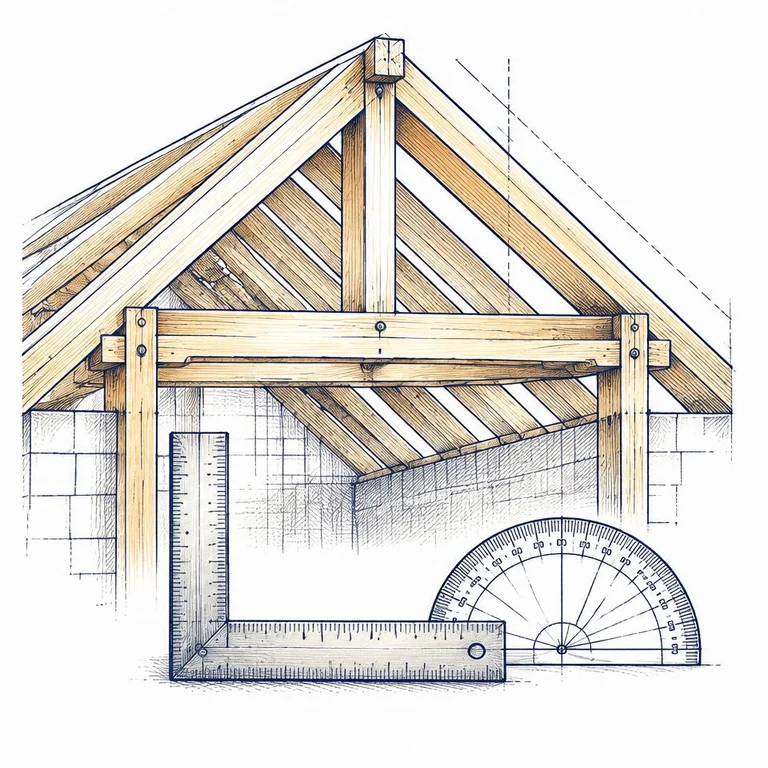 Construction & ProjectRoof pitch, rafters and slope: one triangle, three tradesOne labeled triangle connects roof pitch, percent grade, and rafter slope length, but a geometric answer is not a structural design or cutting list.15 November 2026 · 8 min read
 Construction & ProjectHow to order concrete without running short or overpayingA field-focused guide to concrete quantities, thickness checks, sensible allowances and the delivery details that prevent expensive surprises.14 November 2026 · 7 min read
Sources and standards
About the author
Dr. Hassan Khames Eliwa holds a PhD in Construction & Built Environment and has more than 20 years of international project controls experience. He is Director of Eliwa Project Controls Limited in Auckland and founder of PMMilestone.org and PMMilestone.com.
Buy me a coffee