Slope Grade Calculator
This slope grade calculator converts signed vertical rise and positive horizontal run into percent grade, rise/run ratio and angle. It preserves uphill or downhill direction and reports an explicitly labeled vertical-to-horizontal ratio rather than leaving the ratio convention ambiguous.
By Dr. Hassan Khames EliwaLast updated
Result
- Rise/run
- 0.050000
- Angle
- 2.8624°
- Vertical : horizontal
- 1:20.0000
- Run (other units)
- 65.6168 ft
How it works
Establish the direction of travel
Choose a start point and an end point before assigning a sign. Rise is positive when the end is higher than the start and negative when it is lower. Run stays positive: it is the horizontal separation in the chosen travel direction. Reversing direction reverses the rise sign, not the magnitude of horizontal distance.
Metric inputs use metres for both dimensions; imperial inputs use feet for both. Convert any smaller units first so rise and run are comparable. A level survey may provide elevations rather than a direct rise. Subtract the start elevation from the end elevation and enter that difference, keeping its sign.
Use horizontal distance, not the sloping path
Grade percent equals rise divided by horizontal run, multiplied by a hundred. Angle is arctangent of the signed rise/run ratio, converted to degrees. These are alternate descriptions of the same geometry, but percent and degrees are not interchangeable. The tangent relationship matters especially as the slope becomes steeper.
If a tape follows the sloping surface, its reading is longer than horizontal run. Entering it as run understates the actual grade. Establish the horizontal projection with an appropriate survey method or resolve the right triangle first. The calculator does not infer that correction from an unlabeled surface distance.
Read the ratio convention carefully
The decimal rise/run output retains the original signed ratio. The vertical-to-horizontal output normalizes the vertical magnitude and reports the corresponding horizontal distance. For a falling slope, the vertical term is negative. Other documents may write horizontal-to-vertical ratios in the opposite order, so the output label belongs with the value whenever it is copied.
Zero rise is treated as level and given a text ratio rather than an infinite horizontal number. Run cannot be zero: a vertical line has no finite percent grade. The permitted signed rise and positive run are bounded, and extreme ratios are rejected as an input safeguard. Those numerical boundaries are not acceptable grades for roads, ramps, drainage or excavation.
Average grade is not a profile
The calculation describes the straight relationship between the two endpoints. A path can meet the same endpoints while containing a steep local section, a hollow or a reverse fall. If drainage or access depends on uninterrupted grade, survey intermediate points and check each relevant segment. An overall positive average cannot rule out local ponding.
Likewise, this geometric result does not approve an accessible route, road alignment, batter slope or drainage installation. Applicable requirements may involve crossfall, landings, transitions, surface condition, erosion control and many other details beyond endpoint grade. Consult the project specification and relevant authority rather than using the output as a compliance statement.
Keep precision proportionate to the survey
The results display enough decimal places to compare conversions, but the input measurement controls practical accuracy. Short runs can magnify small elevation errors. Record the benchmark, measurement method and endpoint locations alongside the calculation so another person can verify both sign and distance. The converted run is a useful unit check, not an independent measurement.
Worked example
Scenario: rising metric route
The end point is 1 m above the start over 20 m of horizontal run. Grade is 5.0000%, rise/run is 0.050000 and angle is 2.8624°. The vertical-to-horizontal ratio is 1:20.0000. The run converts to 65.6168 ft. This is the average endpoint grade only.
Scenario: falling imperial line
A line drops 1 ft over 12 ft horizontally. Enter rise as -1 ft and run as 12 ft. Grade is -8.3333%, rise/run is -0.083333 and angle is -4.7636°. The explicitly signed vertical-to-horizontal ratio is -1:12.0000. Run converts to 3.6576 m. A positive run keeps the direction convention unambiguous.
Expert tips
Common mistakes
- Reading percent grade as degrees gives the wrong inclination. Both describe direction, but their numerical scales are linked by the tangent relationship.
- A measured slope length is longer than its horizontal projection. Resolve that component before using the distance as run.
- A ratio copied without its vertical-to-horizontal label is ambiguous. Another trade may use the reverse convention and interpret the same numbers differently.
Frequently asked questions
Can rise be negative?
Yes. A negative rise represents a fall in the chosen direction of travel.
Can run be negative?
No. Keep horizontal separation positive and express direction through the rise sign.
What happens on level ground?
Zero rise returns zero grade and angle, with a level text label instead of a reciprocal ratio.
Is percent the same as degrees?
No. Grade uses rise/run while angle uses the arctangent of that ratio.
Does it check accessibility?
No. It supplies geometry only, not an assessment against access or building requirements.
Can it find local low points?
Not from endpoints alone. Survey and calculate the intermediate segments to check the profile.
Related calculators
Related guides
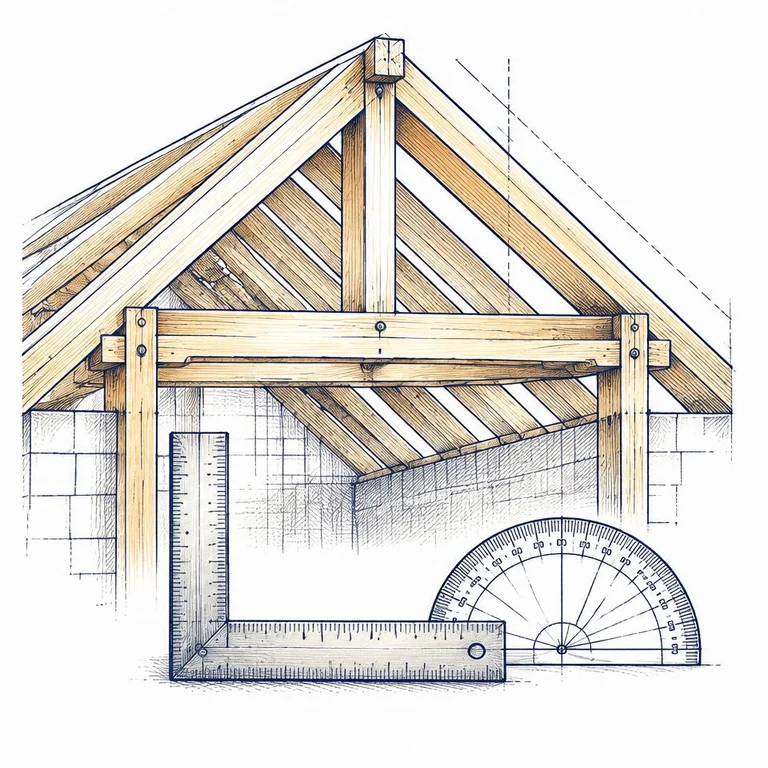 Construction & ProjectRoof pitch, rafters and slope: one triangle, three tradesOne labeled triangle connects roof pitch, percent grade, and rafter slope length, but a geometric answer is not a structural design or cutting list.15 November 2026 · 8 min read
 Construction & ProjectHow to order concrete without running short or overpayingA field-focused guide to concrete quantities, thickness checks, sensible allowances and the delivery details that prevent expensive surprises.14 November 2026 · 7 min read
Sources and standards
About the author
Dr. Hassan Khames Eliwa holds a PhD in Construction & Built Environment and has more than 20 years of international project controls experience. He is Director of Eliwa Project Controls Limited in Auckland and founder of PMMilestone.org and PMMilestone.com.
Buy me a coffee