Equipment Hourly Cost Calculator
Estimate equipment cost per productive hour by combining annualized ownership with fuel, maintenance and operator costs. Choose either straight-line depreciation plus interest on average investment or a capital-recovery charge that already includes both recovery and return.
By Dr. Hassan Khames EliwaLast updated
Result
Capital recovery already includes depreciation and return; do not add depreciation again. Average-investment is straight-line depreciation plus interest on mean book value. Rates are real or nominal consistently; taxes and profit excluded.
- Ownership hourly
- 25.000 currency/hour
- Operating hourly
- 48.000 currency/hour
- Annual straight-line depreciation
- 16,000.000 currency/year
- Annual capital charge
- 22,000.000 currency/year
How it works
Separate ownership from use-dependent costs
Purchase price, residual value and economic life establish the capital assumptions. Other annual ownership costs can include insurance, licensing and storage where applicable. These annual amounts are divided by productive annual hours, not every hour the machine exists. Fuel consumption, fuel price, maintenance and operator rates are entered per productive hour. The resulting total is a planning rate in generic currency units, not a hire quotation or a guarantee of actual fleet performance.
Calculate depreciation without confusing cash flow
Straight-line annual depreciation is purchase price minus residual value, divided by economic life in years. Residual must be nonnegative and cannot exceed purchase price. Depreciation allocates the economic loss in value; it is not a scheduled loan repayment or a tax deduction calculation. A financed purchase may have very different monthly cash payments, while tax depreciation can follow jurisdiction-specific rules unrelated to the simplified economic ownership model used here.
Choose one capital method, never both
Average-investment method adds annual depreciation to the capital rate times half the sum of purchase and residual values. Capital-recovery method uses an annuity-equivalent charge: (purchase minus residual) × i / (1 − (1 + i)^−n) + residual × i. At zero interest it reduces to depreciation. The recovery charge already accounts for capital return and recovery, so adding the separately displayed depreciation again would double count part of ownership cost.
Make annual utilization a defensible assumption
Productive annual hours must be positive and no greater than 8,784, allowing a leap-year ceiling. Economic life is positive and capped at 100 years; capital rate is zero to 100 percent. Low utilization spreads fixed ownership over fewer productive hours and can dominate the hourly rate. Standby, weather, mobilization and repair downtime need explicit treatment when deciding whether an annual-hour assumption is achievable. Avoid using engine-meter hours and billable productive hours interchangeably.
Interpret the operating allowance carefully
Fuel hourly cost is consumption per productive hour times fuel price in matching volume units. Maintenance is an entered hourly allowance, not a computed overhaul model. Operator input should reflect the intended burden basis, including employment on-costs if the estimate requires them. Taxes, profit, transport, attachments and exceptional repairs are not automatically included. Use a consistent real or nominal capital rate and residual-value basis; mixing present purchasing power with inflated future assumptions distorts comparisons between ownership alternatives.
Worked example
Two capital-method scenarios
Purchase 100,000, residual 20,000, life five years, annual hours 1,000, capital rate 10% and other annual ownership 3,000 give depreciation 16,000. Average investment interest is 6,000, annual capital charge is 22,000 and ownership is 25.000 per hour. Fuel 10 units/hour at 1.5, maintenance 8 and operator 25 give operating cost 48.000 and total 73.000 per hour.
With the same inputs but capital recovery and a zero capital rate, annual capital charge is 16,000. Ownership is 19.000 and total cost is 67.000 per hour. Zero interest is handled directly rather than dividing by zero.
Expert tips
Common mistakes
- Adding depreciation again after selecting capital recovery.
- Dividing ownership by calendar hours instead of productive utilization.
- Mixing fuel consumption in gallons with prices per litre.
Frequently asked questions
Is loan interest already included?
The capital rate is an economic financing or opportunity-cost assumption. Do not add loan interest again without reconciling the model to a separate financing cash-flow analysis.
Why show depreciation under capital recovery?
It remains a useful reference allocation. The total uses the recovery charge instead, so the displayed straight-line depreciation is not added a second time.
Can residual equal purchase price?
Yes. Straight-line depreciation then becomes zero, although capital return and other ownership costs can remain. Check whether that resale assumption is commercially credible over the selected life.
Does fuel have to be litres?
No. Use any consistent consumption and price unit, such as gallons per hour and currency per gallon. The calculation multiplies them without converting volume units.
Is maintenance a percentage of purchase?
Not here. Enter maintenance directly per productive hour, based on records or an independently developed allowance. Keep major overhaul assumptions consistent with the chosen economic life.
Can I compare this with a rental rate?
Yes, after aligning inclusions. Rental may exclude fuel, operators, transport, insurance or minimum hours. Compare equivalent scope and utilization rather than simply selecting the smaller headline number.
Related calculators
Related guides
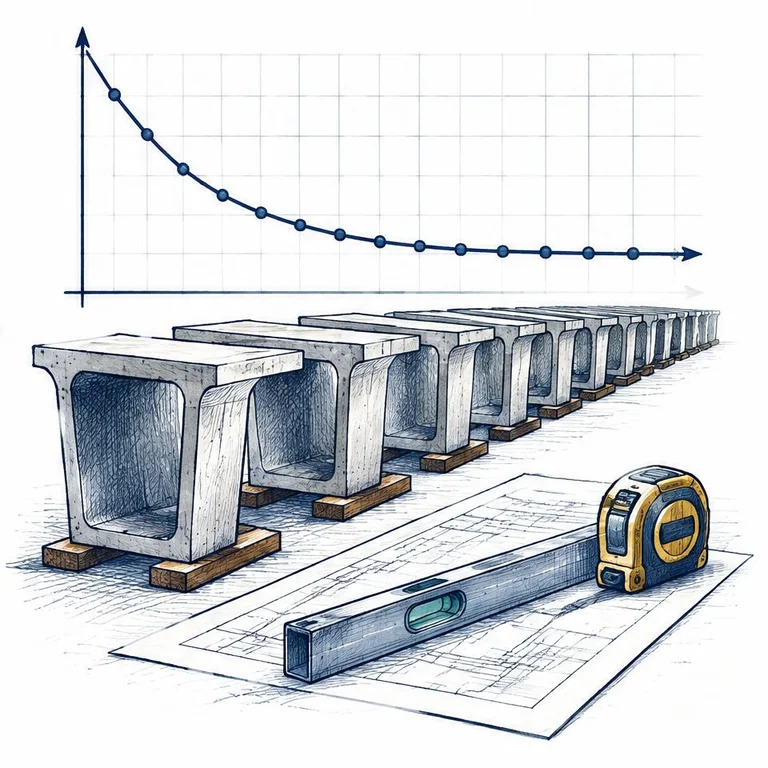 Construction & ProjectLearning curves in construction: averages vs unitsApply Wright cumulative-average learning curves, verify incremental unit effort, and translate repeatable work into duration and labour cost.15 November 2026 · 8 min read
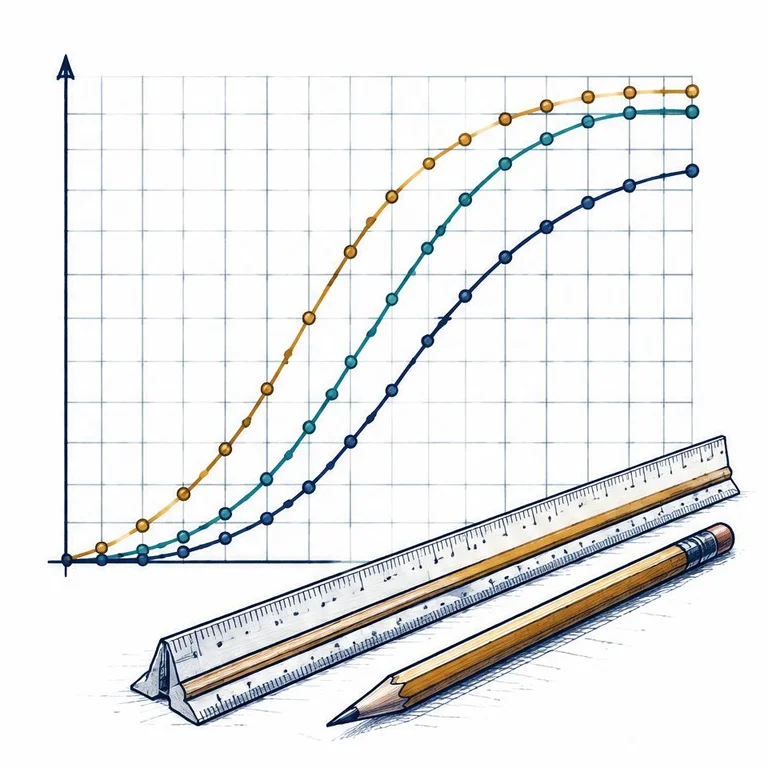 Construction & ProjectReading an S-curve: planned, earned and actual on one chartA practical way to separate planned accomplishment, earned value and actual cost before interpreting the gaps.15 November 2026 · 8 min read
Sources and standards
About the author
Dr. Hassan Khames Eliwa holds a PhD in Construction & Built Environment and has more than 20 years of international project controls experience. He is Director of Eliwa Project Controls Limited in Auckland and founder of PMMilestone.org and PMMilestone.com.
Buy me a coffee