Fraction Calculator
The fraction calculator adds, subtracts, multiplies or divides two exact fractions and returns a simplified fraction, a mixed number and a decimal approximation. Enter an integer, a fraction such as 3/4, or a mixed number such as 1 1/2.
By Dr. Hassan Khames EliwaLast updated
Result
- Mixed number
- 2 1/4
- Decimal
- 2.25
How it works
Exact arithmetic before decimal conversion
A fraction represents a numerator divided by a nonzero denominator. The calculator stores these integer components exactly rather than converting the inputs to rounded decimal values. A whole number is treated as having denominator 1.
For addition and subtraction, a/b ± c/d becomes (ad ± bc)/(bd). Multiplication gives ac/bd. Division multiplies by the reciprocal, so (a/b) ÷ (c/d) becomes ad/bc. The second numerator cannot be zero in division because its reciprocal would not exist.
The greatest common divisor removes factors shared by numerator and denominator. The denominator is then made positive, leaving any negative sign on the numerator. This gives a consistent simplified result, including zero as 0 rather than an unsimplified zero fraction.
Mixed numbers separate the whole-number quotient from the remainder. A negative mixed input such as −1 1/2 means −(1 + 1/2), not −1 + 1/2. Use a proper fractional part in mixed inputs: 1 3/2 is rejected, while 5/2 or 2 1/2 is accepted. Each integer component may contain up to 100 digits, making the limit explicit rather than silently losing precision.
Exact numbers and measured quantities
Exact fraction arithmetic preserves the values you enter, but it cannot remove uncertainty from a measurement. A marked measuring cup, ruler, or cut piece still has practical limits. Keep the exact fraction while planning the operation, then choose a sensible measuring or cutting tolerance for the physical task.
The decimal result is a convenience for comparison with decimal scales. When moving between the two displays, retain the simplified fraction as the reference rather than feeding a rounded decimal back into later work. This matters most when a denominator produces a repeating expansion or several operations are chained together.
Worked example
Combining measured quantities
Suppose one batch needs 3/4 cup of an ingredient and another needs 1 1/2 cups. Choose Add and enter those two values. The mixed number becomes 3/2, so the sum is 3/4 + 6/4 = 9/4.
The simplified fraction is 9/4, the mixed-number result is 2 1/4, and the decimal display is 2.25. These are three ways to express the same quantity, not separate estimates.
If instead you divide 3/4 by 1 1/2, the reciprocal calculation is 3/4 × 2/3 = 1/2. The mixed-number display remains 1/2, because there is no whole-number part, and the decimal result is 0.5. This is useful when asking how many larger portions fit into a smaller available amount.
Expert tips
Common mistakes
- Adding denominators gives the wrong piece size. The denominator describes the size of each piece; both quantities must be expressed in matching pieces first.
- Decimal notation is not accepted in the fraction fields. Write 1/2 rather than 0.5, or use the scientific calculator for a decimal expression.
- A sign inside the fractional part makes a mixed input ambiguous. Enter −1 1/2 for negative one and a half; the leading sign applies to the whole value.
Frequently asked questions
Can I enter a whole number?
Yes. Enter 3 to represent 3/1. You can combine whole numbers with proper fractions, improper fractions or mixed numbers using any of the four supported operations.
Are negative denominators accepted?
A simple fraction such as 3/−4 is accepted and normalized to −3/4. Mixed numbers require a positive denominator and a proper fractional part to avoid ambiguous notation.
Why does the decimal stop?
The decimal result is rounded to at most ten places. Some fractions, including 1/3, repeat indefinitely. The simplified fraction remains exact even when its decimal display is only an approximation.
Can I divide by a zero fraction?
No. A second fraction of 0/5 is a valid number, but dividing by it is undefined. Zero is allowed as an operand for addition, subtraction and multiplication.
How is a mixed number different from multiplication?
In this input format, a space joins a whole number and a fraction by addition. Thus 2 1/3 means 2 + 1/3. Select Multiply explicitly when you intend to multiply two separate quantities.
Related calculators
Related guides
 MathPercentages people get wrong: change, difference and pointsThe denominator determines the answer. Learn to distinguish percentage change, symmetric difference and percentage-point movements.14 November 2026 · 7 min read
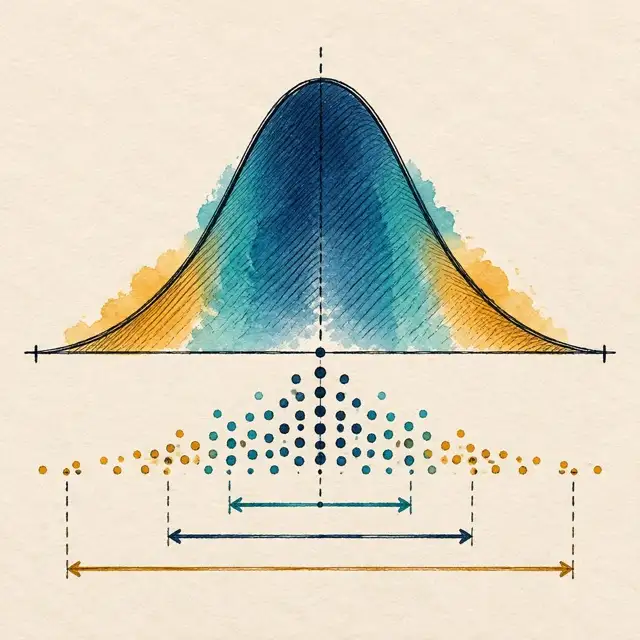 MathStandard deviation without the jargonThe average tells you the centre. Standard deviation helps describe the spread, provided you know what the data represents.14 November 2026 · 7 min read
Sources and standards
About the author
Dr. Hassan Khames Eliwa holds a PhD in Construction & Built Environment and has more than 20 years of international project controls experience. He is Director of Eliwa Project Controls Limited in Auckland and founder of PMMilestone.org and PMMilestone.com.
Buy me a coffee